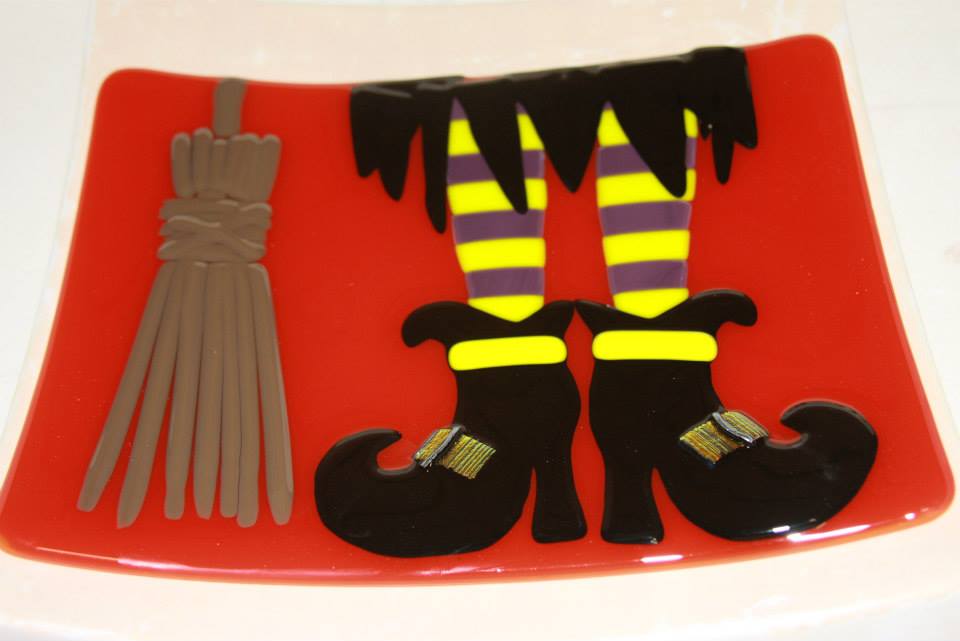
Welcome to the Studio
Artistry in Fused Glass
Step into a world where light, color, and intense heat collide. We craft unique kiln-formed pieces that capture the fluid beauty of glass suspended in time.
Welcome to the Studio
Step into a world where light, color, and intense heat collide. We craft unique kiln-formed pieces that capture the fluid beauty of glass suspended in time.
Powered by Google's Gemini AI, these tools bridge the gap between creative spark and technical execution.
Generate precise firing schedules based on your specific glass stack.
Stuck? Enter a feeling, nature scene, or abstract concept to get a project recipe.
Before the heat transforms it, glass is rigid, sharp, and unforgiving. Welcome to Studio 1465°, where we explore the fragile boundary between solid and liquid.
We start with sheets of compatible glass (COE 90 or 96). Using carbide cutters, we score the surface and snap it along the molecular fault line. It's geometry meeting geology.
Edges are ground down. Layers are stacked. Frit (crushed glass), stringers (threads), and dichroic metallic coatings are layered to create depth and texture before the kiln.
The assembled piece is placed on a kiln shelf treated with primer. The lid closes. The physics are about to change. We begin the slow ramp up to prevent thermal shock.
At this temperature, glass is no longer a solid. It is a viscous liquid. Sharp edges round over, separate layers merge into a single uniform mass, and trapped air becomes perfectly spherical bubbles.
Glass sticks together but retains texture and relief.
Edges soften greatly, but dimensional height remains.
Total unification. Surface is smooth and glossy.
The most critical part of the process is not the heating, but the cooling. We must hold the glass at roughly 900°F to allow internal stresses to relax. Cooling too fast results in thermal shock and shattered art. Patience is the final ingredient.
Here, light, color, and fire converge into one-of-a-kind fused glass art pieces that are ready to find their forever home. Each work in this collection has journeyed through multiple high-temperature firings, careful cold-working, and meticulous hand-finishing to achieve its final form.